
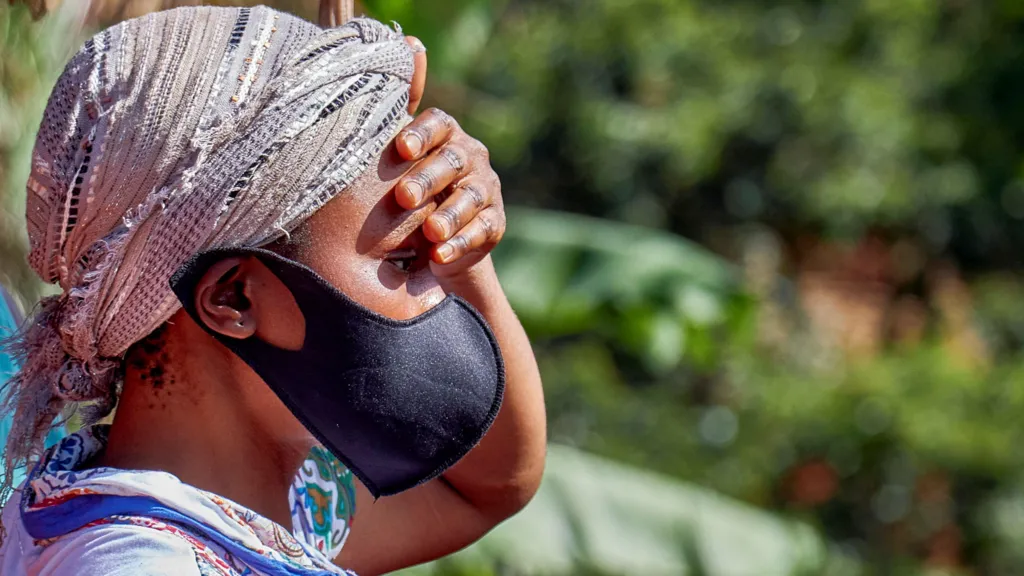
In a chilling declaration, Johnny Luboya Nkashama, the military governor of Ituri province in the Democratic Republic of Congo, likened the fight against the current Ebola outbreak to a desperate war. The region, which has become the epicenter of the deadly virus, is grappling with a staggering crisis. Since the outbreak was declared on May 15, health officials have recorded over 900 suspected cases and 223 suspected fatalities. The situation worsens daily as residents in affected areas don face masks and avoid contact in a desperate attempt to stem the spread of the virus.
Nkashama spoke candidly with French broadcaster RFI, emphasizing the urgent need for a robust response to prevent Ituri from spiraling into catastrophe. "People in affected areas are not receiving enough food," he lamented. The governor underscored the dual challenges of overcrowding and other diseases complicating the response. The World Health Organization (WHO) has declared the outbreak a public health emergency of international concern, revealing that the virus's spread may be accelerating beyond initial predictions. WHO Director-General Tedros Adhanom Ghebreyesus, set to visit DR Congo, warned responders are "playing catch-up" amid the escalating crisis.
Historically, Ituri province has faced struggles beyond health crises, with military governance in place since 2021 aimed at combatting armed groups, including the deadly Allied Democratic Forces (ADF). The ongoing instability has hampered efforts to effectively manage health emergencies, such as this Ebola outbreak. The region's vulnerabilities have been laid bare as the governor called for immediate deployment of qualified personnel to combat the virus and secure treatment centers for those affected.
The impact of this outbreak extends beyond the immediate health risks. Families are in turmoil, with angry relatives attempting to reclaim the bodies of loved ones who succumbed to Ebola, targeting treatment centers in their desperation. Nkashama's call for mobilization of financial resources is urgent; he warns, "The more time we lose, the closer we come to disaster." The Africa Centres for Disease Control and Prevention (Africa CDC) is actively coordinating with health ministers from DR Congo, Uganda, and South Sudan to finalize a cross-border response strategy, with a budget of $319 million aimed at controlling the outbreak.
Looking ahead, the situation remains precarious. The urgency of the crisis demands that readers keep a close eye on developments in Ituri. With WHO's involvement and international aid pledges like South African President Cyril Ramaphosa's initial $5 million support, the hope is that swift action can mitigate the impending disaster. As the world watches, the necessity for timely intervention has never been clearer. The fight against Ebola in DR Congo is not just a local struggle; it resonates globally, reminding us of the interconnectedness of health and security in our complex world.


0 Comments
No comments yet. Be the first to share your thoughts.
Leave a Comment