
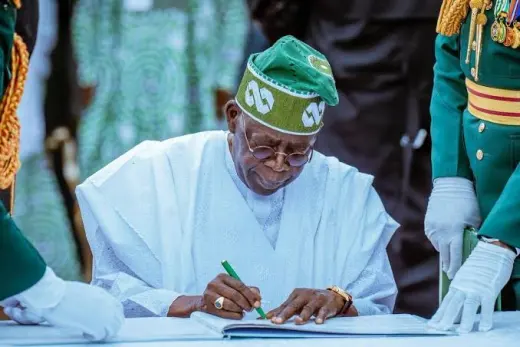
In a startling turn of events, President Bola Tinubu’s administration has recorded a massive surge in Nigeria’s federal revenue, despite grappling with poor budget performance. On May 29, 2023, during his swearing-in ceremony at Eagle Square, Abuja, Tinubu shocked the nation by declaring an end to fuel subsidies, a move that sent shockwaves through both the public and his inner circle. His declaration aimed to redirect funds towards addressing pressing socio-economic issues, yet it ignited unprecedented inflation across the country. As the administration pushed for economic reforms, the Naira faced severe depreciation, but the government’s revenue soared, raising crucial questions about the overall fiscal health of Nigeria.
Under Tinubu’s leadership, the Nigeria Customs Service (NCS) reported astonishing revenue growth. From ₦3.21 trillion in 2023, collections skyrocketed to ₦6.1 trillion in 2024 and reached an unprecedented ₦7.28 trillion in 2025, exceeding annual targets by significant margins. For instance, the 2024 target of ₦5.07 trillion was surpassed by 22%, while the 2025 goal of ₦6.58 trillion was exceeded by 10%. This remarkable growth highlights the effectiveness of Tinubu’s strategic fiscal reforms, particularly in expanding the tax base and modernizing tax administration.
Historically, Nigeria has faced severe challenges in revenue generation, often relying on borrowing to meet budgetary needs. The current administration’s extensive reforms have shifted the narrative. The Federal Inland Revenue Service (now National Revenue Service) recorded an impressive ₦47.39 trillion in tax revenues from October 2023 to September 2025. This success stemmed from aggressive tax strategies focused on the non-oil sector, which contributed approximately 76% of total collections. In 2023 alone, the NRS collected ₦12.374 trillion, surpassing its 2024 target of ₦19.4 trillion with an actual collection of ₦21.6 trillion.
The implications of these fiscal changes are profound. While the surge in revenue provides a glimmer of hope for Nigeria’s economy, the challenges of budget performance loom large. Officials and economists express concern over the government’s increasing reliance on borrowing, despite the revenue boosts. President Tinubu himself noted in September 2025 that Nigeria had met its revenue targets ahead of schedule, reducing the need for loans. However, the persistent inflation and economic pressures raise doubts about the sustainability of this progress. Citizens remain wary, as the promise of fiscal responsibility clashes with everyday financial struggles.
Looking ahead, the focus will be on how the Tinubu administration balances revenue generation with effective budget management. As the government navigates these turbulent waters, observers will closely monitor its strategies to sustain revenue growth while mitigating inflationary impacts. The coming months will be critical in determining whether Nigeria can secure a stable economic future without falling back into the cycle of borrowing.

0 Comments
No comments yet. Be the first to share your thoughts.
Leave a Comment