
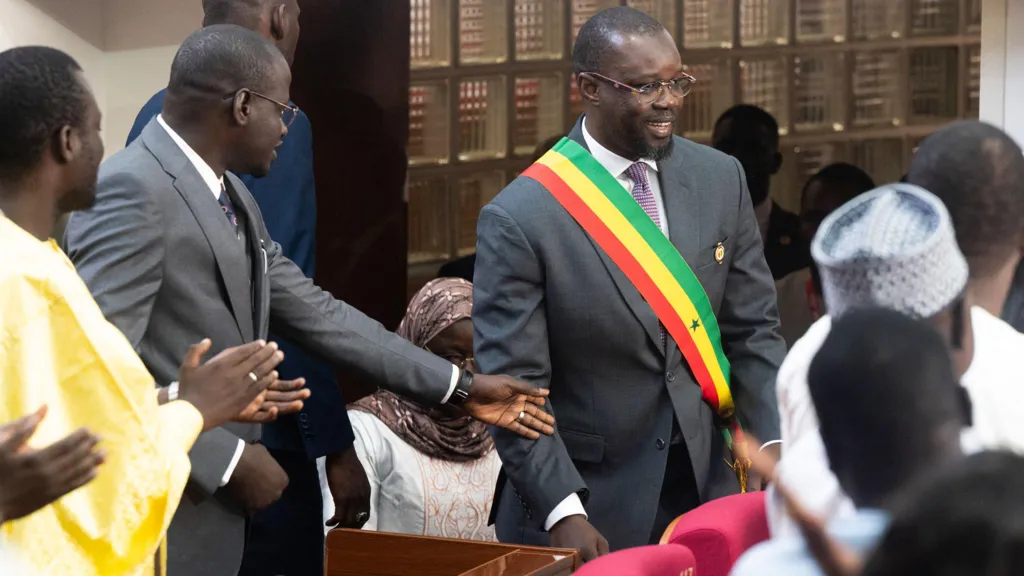
Ousmane Sonko's political saga reached a dramatic new chapter this week when he was elected Speaker of Senegal's National Assembly, mere days after being unceremoniously dismissed as Prime Minister by President Bassirou Diomaye Faye. This unexpected turn of events unfolded on Monday in Dakar, where Sonko's supporters celebrated his ascension to the second highest political office in the country, setting the stage for an escalating power struggle between the two former allies. The air is thick with tension as Senegal grapples with a political crisis that has simmered for months, threatening stability in this West African nation.
The circumstances surrounding Sonko's election are as significant as they are contentious. Following the resignation of the previous Speaker on Sunday, Sonko's appointment reflects the strong backing he commands from his party, Pastef, which holds a majority in the National Assembly. “This is a pivotal moment for democracy in Senegal,” Sonko declared in a speech to his supporters, emphasizing his commitment to challenging Faye’s policies, particularly regarding the country's mounting debt crisis. The stakes are high; analysts warn that Sonko's new role could severely limit Faye's political maneuverability, especially as he will need legislative support to implement his agenda.
The roots of this political conflict run deep. Months of public confrontation have highlighted a growing rift between Sonko and Faye, who once stood as allies against former President Macky Sall. Sonko, a charismatic leader, has openly criticized Faye's handling of Senegal's economic challenges, which has drawn ire among citizens concerned about rising debt. His political journey has been fraught with challenges, including a controversial defamation conviction that barred him from contesting the upcoming presidential election in 2024, a decision that many view as a politically motivated attempt to sideline a formidable opponent.
The implications of Sonko's election as Speaker ripple far beyond the walls of parliament. His significant support, particularly among the youth demographic, positions him as a formidable figure in Senegal's political landscape. Experts are voicing concerns about the potential for escalating tensions between the two leaders, which could lead to instability in a nation already wrestling with economic difficulties. Local officials and citizens alike express mixed reactions; some hail Sonko's rise as a victory for democratic representation, while others fear it may lead to further political gridlock.
As the political landscape shifts, all eyes will be on Senegal in the coming weeks. Observers will be keen to see how President Faye navigates this new challenge, particularly with his inability to dissolve parliament for at least two more years. The next parliamentary sessions promise to be contentious, with Sonko poised to leverage his new role to rally opposition against the president's agenda. The unfolding drama signals a crucial moment for Senegal, as the nation braces for potential political upheaval in the face of economic uncertainty.



0 Comments
No comments yet. Be the first to share your thoughts.
Leave a Comment