
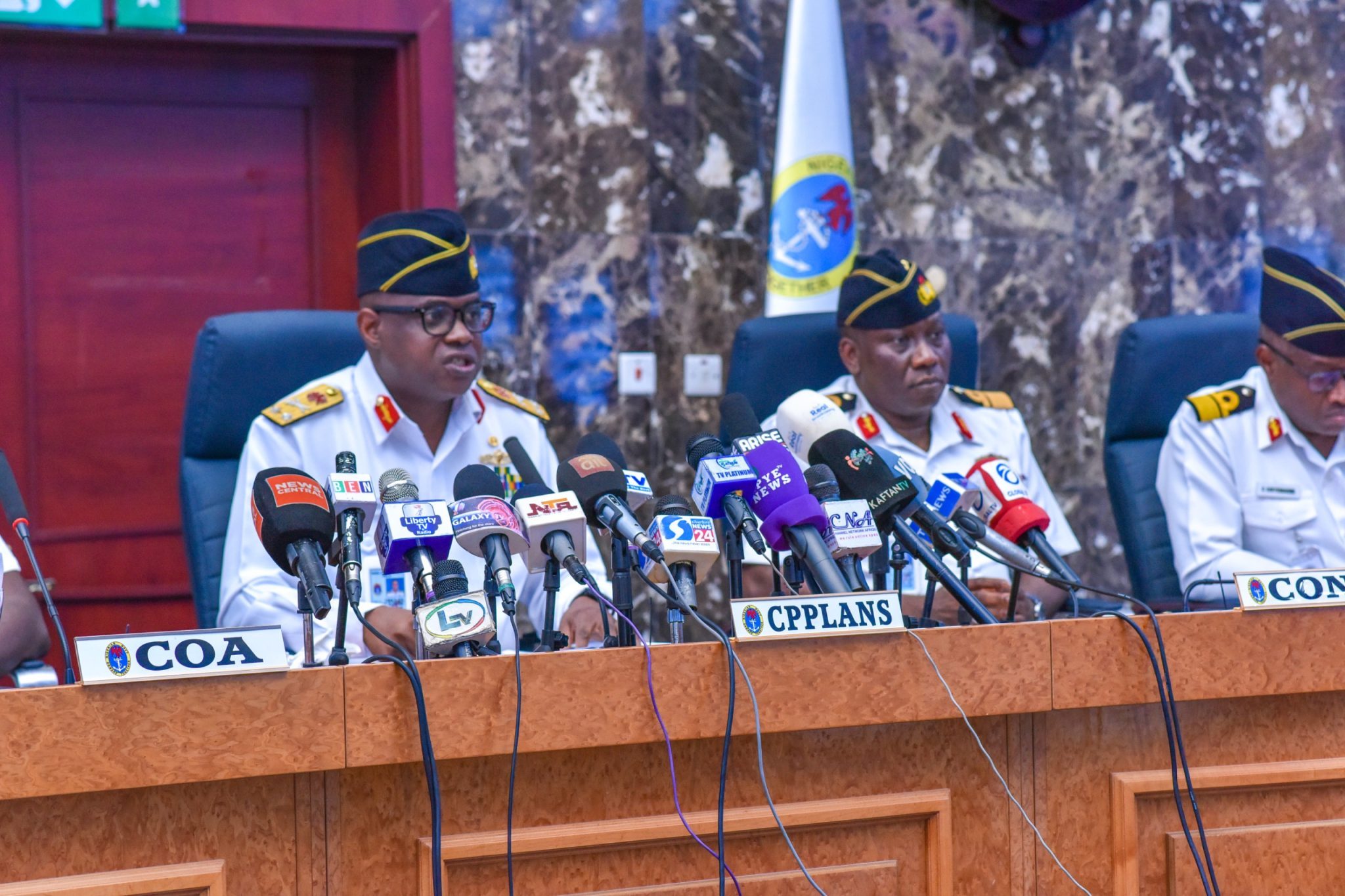
The Nigerian Navy stands at a crossroads as it marks 70 years of service, declaring urgent challenges that could hinder its effectiveness. During an international press briefing in Abuja on Thursday, Rear Admiral Akinola Olatunde, the Chief of Policy and Plans, laid bare the Navy's struggle with technology and research development. The admiral emphasized that the Navy has evolved significantly, transitioning from a mere coastal policing force to a robust military entity essential for national security and regional stability. This transformation underscores the growing complexity of maritime threats facing Nigeria today.
Olatunde's remarks came amid questions from journalists about the Navy's current capabilities and future direction. He highlighted that while the Navy has made significant strides since its inception on June 1, 1956, with only 250 personnel and 11 ships, it now faces modern challenges such as drug trafficking and cybercrime. "We need to improve in the areas of cyber and evolving crime," he stated, pointing to the necessity for a technological upgrade. The admiral's insights reflect a broader concern within the military community about adapting to new forms of warfare and crime.
Historically, the Nigerian Navy has undergone several transformations. Initially known as the Naval Defence Force, it became the Royal Nigerian Navy in 1958, shedding the 'Royal' prefix in 1963 when Nigeria became a republic. The Navy was formally established as a statutory branch of the Armed Forces in 1964 under Act No 21 of Parliament. Commodore JEA Wey became the first indigenous head of the Navy, marking a significant milestone in Nigeria's military history. These historical shifts illustrate the Navy's journey from colonial service to a sovereign force with a critical role in maintaining security and stability in the region.
The implications of the Navy's challenges extend beyond its ranks. As Nigeria grapples with increasing maritime threats, citizens and officials alike express concerns about national security. The Navy's inability to keep pace with technological advancements could undermine its strategic effectiveness. "We would have loved to be further ahead in terms of technology and research and development," Olatunde admitted. This sentiment resonates with many, as the public anxiously watches how the Navy adapts to keep its waters safe and secure.
Looking ahead, the Nigerian Navy must prioritize technological enhancements and research capabilities. As it sets its strategic vision toward 2030, the focus on cyber threats and evolving maritime challenges must take precedence. The Navy's ability to respond effectively to these issues will define its future and, by extension, the safety of Nigeria's coastal waters. Observers will be keenly watching the Navy's next steps as it strives to bolster its defenses and maintain its legacy as a formidable force in West Africa.





0 Comments
No comments yet. Be the first to share your thoughts.
Leave a Comment