

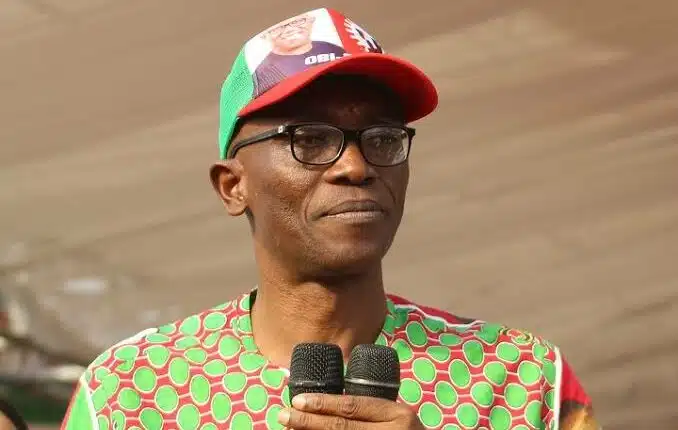
In a stunning confrontation that sent shockwaves through Nigerian political circles, Governor Otti publicly challenged Abure on May 17, 2026, demanding an explanation for his persistent presence in political discourse. During a heated address in Umuahia, Otti’s words struck a chord with many, igniting discussions about leadership legitimacy and the future of political accountability in Nigeria. The atmosphere was thick with tension as Otti’s piercing questions reverberated through the crowd, leaving many wondering about the implications of Abure’s actions and their impact on the political landscape.
Governor Otti's outburst was fueled by growing frustration over Abure's refusal to step back from the political limelight, despite ongoing controversies surrounding his leadership. "Why are you still parading yourself?" Otti asked, urging Abure to reflect on his role in the current political climate. The governor's remarks were not merely rhetorical; they underscored a deeper issue within the political fabric of Nigeria, where accountability often takes a backseat. This confrontation is not just a personal feud; it represents a larger struggle for transparency and integrity in governance.
The backdrop of this confrontation lies in a tumultuous political history marked by corruption and power struggles. Abure, once a prominent figure, has faced significant scrutiny over the past few years due to allegations of mismanagement and lack of transparency. His tenure has been marred by protests and calls for reform, echoing a widespread demand for change among Nigerian citizens. Otti's challenge to Abure is not just about one individual; it symbolizes a broader demand for a new political paradigm that prioritizes the people's needs over personal ambitions.
This clash between Otti and Abure has significant implications for the political landscape in Nigeria. Citizens are keenly aware of the stakes involved, and reactions have poured in from various quarters. Political analysts have noted that Otti's bold stance resonates with a populace tired of political stagnation. "This is a crucial moment for Nigeria," commented political analyst Dr. Chima Nwosu. "It signals a shift towards demanding accountability from our leaders, which is essential for our democracy to thrive." The conflict highlights the urgent need for a new generation of leaders who prioritize integrity and service over self-interest.
As the political drama unfolds, all eyes will be on how Abure responds to Otti's challenge. Will he address the concerns raised and shift his approach, or will he continue to resist calls for change? The coming weeks promise to be pivotal, as citizens and political observers alike await news of further developments. The future of Nigerian politics hangs in the balance, and this confrontation may be the catalyst for overdue reform. Stay tuned for updates as this story continues to evolve.


0 Comments
No comments yet. Be the first to share your thoughts.
Leave a Comment