

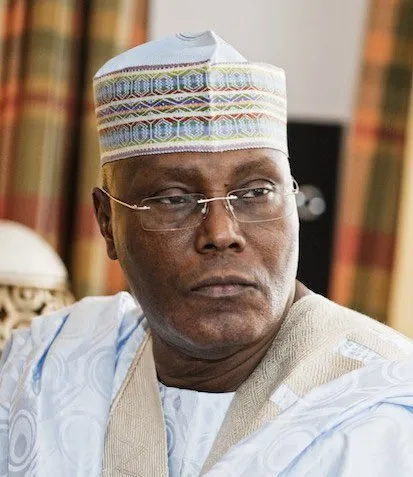
Former Vice-President Atiku Abubakar has questioned the Federal Government’s continued borrowing, demanding greater accountability over rising revenues and the proposed Vienna-listed bond arrangement aimed at financing foreign companies investing in Nigeria.
Former Vice-President and African Democratic Congress (ADC) presidential candidate, Atiku Abubakar, has criticised the Federal Government’s continued appetite for borrowing, arguing that Nigerians deserve explanations on how increased government revenues and savings from the removal of fuel subsidy are being utilised.
Atiku’s position was contained in a statement issued on Thursday by his Senior Special Assistant on Public Communication, Phrank Shaibu, amid the Federal Government’s plan to establish a bond vehicle in collaboration with Austrian authorities and the Vienna Stock Exchange.
The proposed arrangement, known as the Esme Bond, is intended to raise capital through the Vienna Stock Exchange for foreign companies investing in projects in Nigeria.
Minister of Budget and Economic Planning, Atiku Bagudu, had explained that the initiative followed about 18 months of engagement involving Nigerian and Austrian officials, the Vienna Stock Exchange and fund managers.
According to Bagudu, the bond vehicle would provide funding for Austrian companies and other businesses operating in sectors including green technology, waste-to-energy, textiles, pharmaceuticals and agriculture.
He said beneficiary companies would be expected to bring their expertise into Nigeria, invest and expand their operations, describing the initiative as part of efforts to mobilise private capital towards President Bola Tinubu’s target of growing the Nigerian economy to $1 trillion.
Atiku Questions More Borrowing
Reacting to the proposal, Atiku argued that the Federal Government should first account for revenues already available to it before seeking additional financing.
He pointed to increased government revenues, savings associated with fuel-subsidy removal and crude oil prices above the benchmark used for the 2026 budget.
“This is the central contradiction Nigerians are entitled to question,” Atiku said, according to the statement.
He argued that while the government says its revenues have improved, borrowing is increasing and businesses are facing severe operating difficulties.
“Yet borrowing is accelerating, factories are suffocating under energy costs and ordinary Nigerians are still struggling to afford the basics,” he said.
Manufacturers Under Pressure
Atiku also drew attention to the rising cost of energy faced by Nigerian manufacturers.
According to his statement, diesel prices have risen above ₦2,000 per litre in some industrial locations, while energy-related expenses have become a major component of manufacturers’ operating costs.
He cited figures indicating that manufacturers spent about ₦1.34 trillion on alternative energy in 2025, with expenditure in the first half of 2026 already approaching the same level.
Atiku argued that the situation could undermine efforts to industrialise the country.
He said manufacturers confronted with energy costs consuming a substantial share of their operating expenses could be forced to increase prices, reduce production, lay off workers or shut down operations.
Concern Over Crowding Out Private Businesses
The former vice-president further argued that heavy government borrowing from domestic financial markets could make it more difficult and expensive for private businesses to obtain credit.
According to him, manufacturers, farmers and small businesses are being forced to compete with government for limited funds.
“When government absorbs enormous amounts of capital from the domestic financial market, manufacturers, farmers and small businesses are forced to compete with the state for increasingly expensive funds,” he said.
Atiku also questioned the level of information made available about the proposed Vienna transaction, including its size, borrowing cost, repayment structure and the extent of the Federal Government’s exposure.
FG’s Position
The Federal Government, however, has presented the Vienna-listed bond arrangement as a mechanism for attracting private foreign capital and technical expertise into Nigeria rather than simply another conventional government borrowing programme.
Bagudu said the initiative was designed to support foreign companies investing in Nigerian projects and sectors considered important to economic growth.
He also said Nigeria’s improved foreign-exchange conditions and relatively stable naira had made Nigerian assets more attractive to international investors, adding that some investors had recorded dollar returns of nearly 20 per cent.
The minister further said Nigeria’s foreign reserves had risen above $50 billion, providing more than 11 months of import cover.
The contrasting positions have now placed the proposed Esme Bond at the centre of a wider debate over Nigeria’s borrowing strategy, private-sector financing, industrial production and the management of increased government revenues.
While the Federal Government presents the arrangement as an avenue for mobilising private capital and attracting foreign investment, Atiku is demanding greater transparency and questioning why additional financing is being pursued when, in his view, existing revenues and subsidy savings have not sufficiently eased the country’s fiscal pressures.
Press Point News will continue to follow the debate as further details emerge on the structure, cost, beneficiaries and government exposure under the proposed Vienna-listed bond arrangement.


0 Comments
No comments yet. Be the first to share your thoughts.
Leave a Comment