
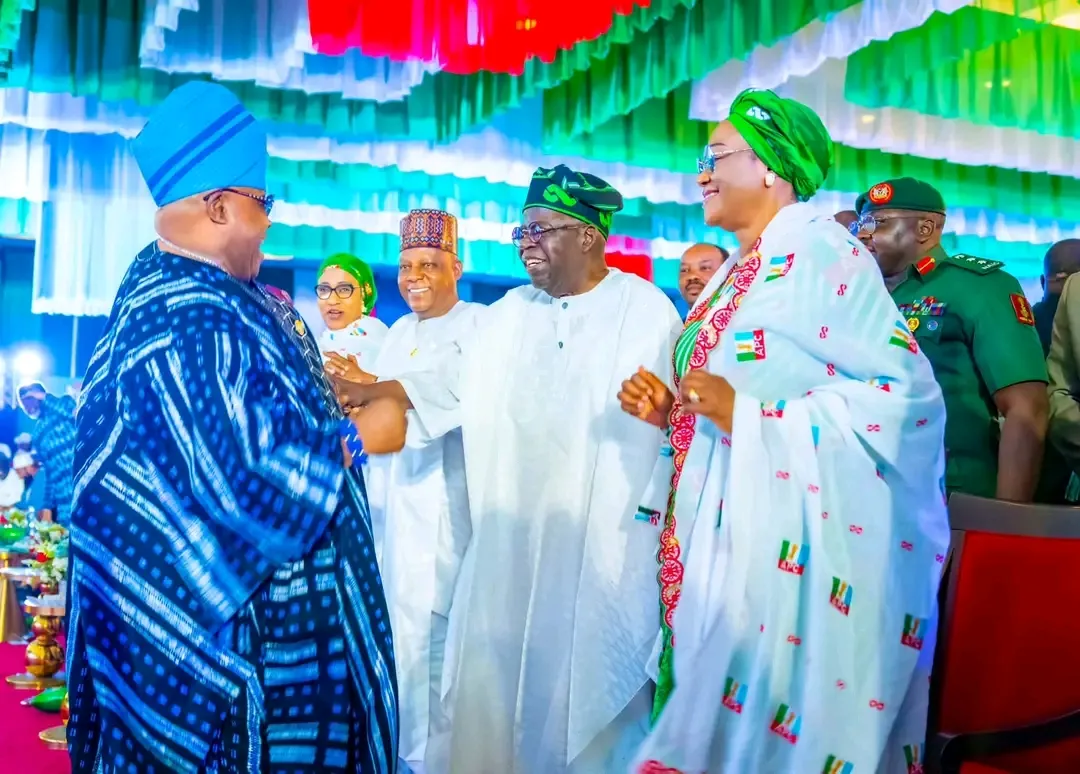
Osun Accord stalwart, Michael Adebayo, has defended Governor Ademola Adeleke’s decision to endorse President Bola Ahmed Tinubu, describing it as a strategic move aimed at protecting the interests of Osun State and ensuring smooth governance.
Adebayo, in a statement shared on his Facebook page, argued that Adeleke’s decision should not be judged solely through the lens of political emotions or past electoral experiences, insisting that the governor’s position was informed by the broader interests of the state rather than personal ambition.
According to him, Adeleke has little to gain personally from the decision, noting that the governor is not joining the All Progressives Congress (APC) and that his victory is not currently being challenged in court.
He maintained that the endorsement could help safeguard Osun residents from political forces he described as threats to the interests of the masses, while creating room for uninterrupted governance and grassroots development.
“If you have a deep understanding of the reason why Governor Adeleke is supporting Tinubu, you will realise that it has nothing to do with personal interest,” Adebayo stated.
He acknowledged that the decision might appear contradictory to some people, particularly given the political experiences surrounding the last governorship election, but urged residents to reconsider their positions and assess the decision based on its potential benefits to the state.
Adebayo expressed confidence that Adeleke’s second term would bring greater progress, peace and democratic dividends to the people of Osun, adding that the governor would not disappoint those who continued to support his administration.
Adebayo Links Tinubu’s Challenges to Godfatherism
The Accord stalwart also argued that President Tinubu was facing the consequences of his strong support for his political party, a decision he said had earned him more opponents, particularly in Osun State.
He used the situation to highlight what he described as the dangers of godfatherism in Nigerian politics, explaining that influential political leaders could suffer reputational damage when associates entrusted with positions of authority abuse their influence.
“Sometimes, the head is not always the problem but the idiots he is surrounded with,” Adebayo said, pointing to the need for political leaders to monitor the conduct of those operating within their circles.
He explained that political loyalty and relationships built during periods of struggle often create expectations among followers, who may later seek to use their connections to advance personal interests, sometimes at the expense of public welfare.
Adebayo added that leaders must be willing to correct wrongdoing, regardless of political affiliation, when the actions of their associates undermine public confidence or damage their reputations.
While acknowledging that Tinubu was not perfect and had faced criticism over the country’s experience in the last three years, he argued that the President could not be expected to monitor every action taken by political associates across the country.
He attributed Adeleke’s performance to his decision to entrust responsibilities to people he described as God-fearing, adding that the governor’s political choices should be assessed within the context of his responsibility to protect Osun State.
Osun’s Interests Must Come First, Adebayo Says
Adebayo urged Osun residents to remain calm and trust the process, maintaining that the interests of the state must take precedence over partisan considerations.
He also cautioned against comparing Osun’s political and governance challenges with those of other states without considering their individual circumstances.
According to him, governors should be judged not merely by the amount of money they receive from the Federal Government but by how effectively they protect their people and deploy available resources to improve their lives.
He alleged that some neighbouring states receive higher allocations than Osun without experiencing similar disputes over local government funds or the alleged forceful takeover of local government councils and motor parks, yet have not necessarily delivered better results than the Adeleke administration.
The Accord stalwart further argued that the challenges confronting Nigerians require action at the appropriate levels of government, stressing that state governors have a responsibility to defend their constituents’ interests in dealings with the Federal Government.
He maintained that if governors across the country prioritised protecting their people and addressing injustice, Nigeria could experience greater stability.
Adebayo also defended the need for political leaders to make difficult decisions to prevent unjustified killings, preserve peace and deliver the dividends of democracy, arguing that history would favour leaders who prioritised the welfare of their people.
He said Adeleke’s decision was intended to protect Osun residents and Yoruba heritage, expressing confidence that the governor would not be remembered as someone who betrayed his people.
Concluding his statement, Adebayo praised Adeleke, whom he described as the Omo Balogun and Asiwaju of Ede land, for what he considered a decision to put the interests of his people first.
He expressed optimism about Osun State’s future and called for continued peace, progress and development in the state and Nigeria at large.

0 Comments
No comments yet. Be the first to share your thoughts.
Leave a Comment