

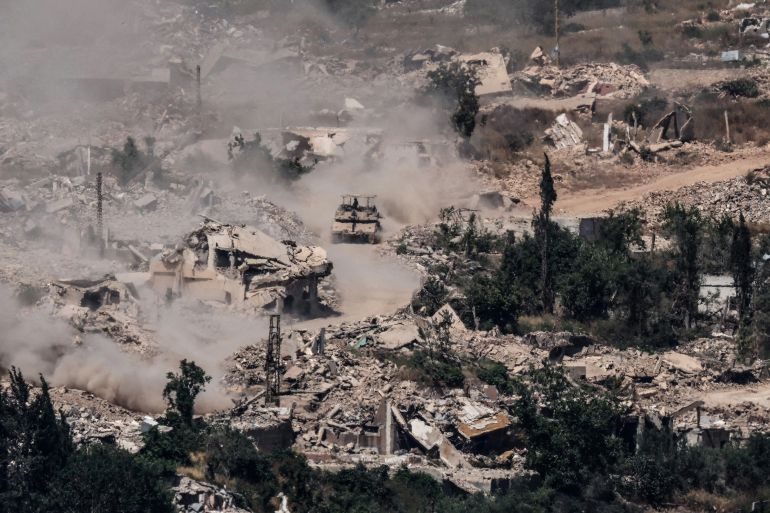
In a shocking escalation, Israeli forces unleashed a barrage of airstrikes in southern Lebanon late Saturday night, leaving communities in despair and fear. The attacks, which began shortly before midnight, struck key areas near the Syrian border and targeted several villages, including the mountainous Nabi Sreij region. This latest wave of violence comes just days after earlier strikes resulted in the deaths of ten people, adding to the mounting toll of civilian casualties in a conflict that shows no signs of abating.
According to Lebanon’s National News Agency, the strikes in towns like Yohmor al-Shaqif and Taybeh echoed through the night, causing extensive damage and widespread panic. Israel’s military had previously issued forced displacement orders for southern villages, intensifying the already dire humanitarian crisis. “There are ambulances here, rescue teams, and families fleeing their homes,” reported Al Jazeera's Obaida Hitto from Tyre, illustrating the chaos and the psychological terror gripping the region. The Lebanese Ministry of Public Health confirmed that recent Israeli strikes severely damaged critical hospital infrastructure, leaving patients and medical staff vulnerable amid ongoing hostilities.
This surge in violence has historical roots, tracing back to the long-standing tensions between Israel and Hezbollah, compounded by a volatile regional landscape. Since March 2, when Israel escalated its military operations in Lebanon, the situation has spiraled, with over 3,100 lives lost, including a heartbreaking toll of 123 medics and over 210 children. The ceasefire declared by U.S. President Donald Trump on April 16 appears to have been disregarded, raising questions about its effectiveness and the future of peace in the region.
The implications of these continued attacks are profound. Civilians bear the brunt of this conflict, enduring trauma and displacement as they face an uncertain future. Local officials and international observers express alarm at the humanitarian fallout, with experts warning that the ongoing violence threatens to destabilize not just Lebanon but the entire region. “This is a catastrophe for innocent people trapped in a cycle of violence,” remarked a humanitarian aid worker, emphasizing the urgent need for a ceasefire that holds.
Looking ahead, the situation remains precarious as international diplomatic efforts struggle to regain traction. Observers urge the global community to monitor developments closely, as the potential for further escalations looms large. The people of southern Lebanon, already weary from years of conflict, now face a renewed onslaught, making it imperative for humanitarian organizations to prepare for an influx of displaced families seeking shelter and support in the coming days.



0 Comments
No comments yet. Be the first to share your thoughts.
Leave a Comment