
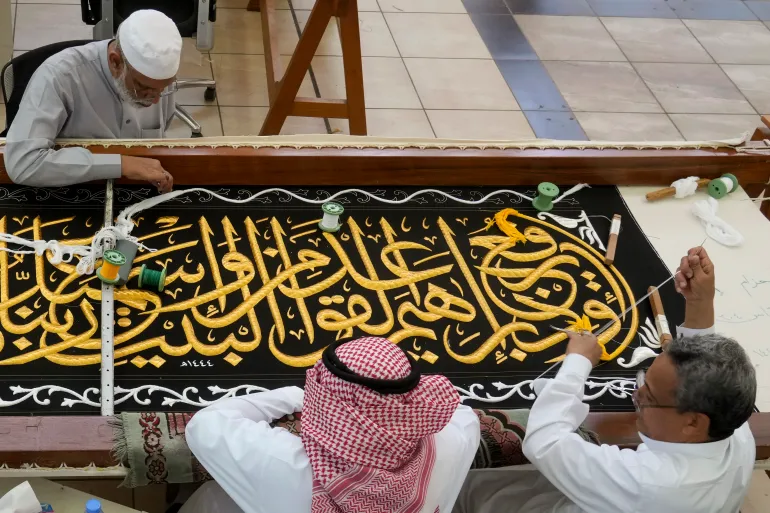
At the heart of the annual Hajj pilgrimage lies the Kaaba, a revered structure that draws over 1.5 million Muslims from across the globe each year. Draped in a stunning black cloth known as the Kiswah, this sacred site is adorned with gold and silver embroidery featuring verses from the Quran. As pilgrims circle the Kaaba in a counterclockwise motion, they engage in a deeply spiritual experience that transcends cultural boundaries, making it a pivotal moment in their lives.
The Kiswah, weighing an impressive 670 kilograms, is meticulously crafted, with artisans in Mecca pouring their skills and devotion into its creation. Each year, the Kiswah undergoes a ceremonial replacement, honoring a tradition that is centuries old. "This is not just a cloth; it is a symbol of unity and faith for millions of Muslims around the world," said a representative from the Kiswa factory in Mecca. The intricate embroidery alone weighs about 200 kilograms, showcasing the dedication and craftsmanship that goes into covering Islam's holiest site.
The origins of the Kaaba date back to the time of the Prophet Abraham, who, alongside his son Ishmael, is believed to have built it as a house of worship. This site has evolved through history, once serving various pagan tribes before the advent of Islam. In 630 CE, Prophet Muhammad returned to Mecca, cleansing the Kaaba of its idols and restoring its purpose as a center for monotheistic worship. Today, it stands as a symbol of faith for over a billion Muslims, who face it in their daily prayers, known as the qibla.
The impact of the Kaaba extends beyond its physical presence; it serves as the spiritual epicenter for Muslims worldwide. It is estimated that more than 20 million pilgrims visit Mecca annually for Hajj and Umrah, reinforcing the significance of the Kaaba in Islamic worship. Reactions from both pilgrims and officials highlight the profound sense of reverence felt within its walls. "Standing before the Kaaba is an indescribable feeling; it connects me to my faith and my community," shared a pilgrim from Nigeria.
Looking ahead, the Kaaba continues to be a focal point for global unity among Muslims. As the next Hajj approaches, observers anticipate not just a continuation of age-old traditions but also adaptations to accommodate the increasing number of pilgrims. The journey to Mecca is not merely a physical one; it represents a deep spiritual pilgrimage that resonates with countless believers, ensuring that the story of the Kaaba and the Kiswah remains alive in the hearts of millions.





0 Comments
No comments yet. Be the first to share your thoughts.
Leave a Comment