
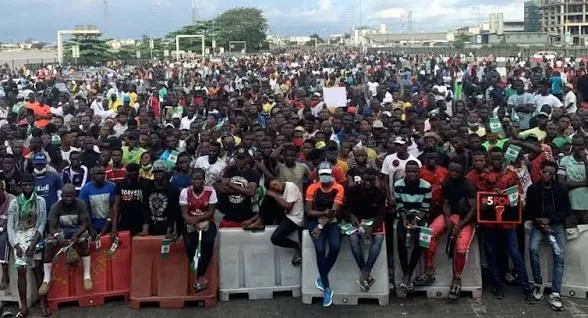
At approximately 6:53 p.m. on October 20, 2020, the Lekki Toll Gate in Lagos went into a blackout as the #EndSARS protest entered one of its most controversial moments.
The incident occurred amid a military deployment to the toll gate, where young Nigerians had gathered to protest against police brutality and demand an end to the Special Anti-Robbery Squad (SARS).
According to accounts of CCTV footage presented before the Lagos State Judicial Panel of Inquiry, the toll gate’s lights went off at approximately 6:53 p.m. Reports of the footage also indicated that a military vehicle drove through the toll gate towards the protesters at approximately 6:55 p.m.
The sequence of events became a critical part of the subsequent investigation into the shooting.
## What Happened Before the Blackout?
Earlier that evening, Nigerian Army personnel had been deployed to the Lekki Toll Gate amid the Lagos State Government’s curfew announcement.
Amnesty International, after analysing video and photographic evidence, reported that military vehicles arrived at the toll gate at approximately 6:45 p.m. The organisation also reported that soldiers opened fire on protesters around that time.
The military disputed allegations that its personnel deliberately fired live ammunition at peaceful demonstrators. During proceedings before the judicial panel, military representatives gave their account of the deployment and the circumstances surrounding the use of force.
However, the timing of the military’s arrival, the blackout and the subsequent gunfire raised serious questions about the sequence of events and the actions of security personnel.
## Did the Blackout Conceal What Happened?
The blackout became one of the most contentious aspects of the incident. Its timing prompted questions about whether the loss of lighting affected the visibility of events and the ability to establish exactly what happened.
However, the fact that the lights went off does not, by itself, prove that the blackout was deliberately arranged to conceal the shooting. Establishing that would require evidence identifying who controlled the lighting, why it was switched off and whether the decision was connected to the military operation.
Video recordings, eyewitness testimony, forensic evidence and the accounts of security personnel subsequently became central to efforts to reconstruct the incident.
## What Did the Judicial Panel Find?
In November 2021, the Lagos State Judicial Panel of Inquiry concluded that soldiers fired live and blank ammunition at the Lekki Toll Gate and that protesters were shot, injured and killed. The panel described the incident as a “massacre in context.”
The Lagos State Government subsequently rejected important aspects of the panel’s conclusions, particularly its findings concerning deaths at the toll gate.
The conflicting positions kept the casualty figures, the military’s conduct and the question of accountability at the centre of public debate.
## Six Years Later: Questions That Remain
Six years after the incident, the key questions remain: Who authorised the military deployment? What instructions were given to the troops? Who fired the ammunition that injured protesters? What explains the timing of the blackout? And have those responsible for any unlawful use of force been held criminally accountable?
The answers must come from credible evidence and transparent investigations rather than speculation or political narratives.
The events of October 20, 2020, remain a defining moment in Nigeria’s struggle for police accountability, the right to peaceful protest and the protection of human rights.
**At 6:53 p.m., the lights went out. What followed, and who should be held accountable, remain questions that demand clear, evidence-based answers.**
*Sources: Amnesty International’s investigative timeline; CCTV footage presented to the Lagos State Judicial Panel of Inquiry; and the pan
el’s report on the October 20, 2020 incident.*



0 Comments
No comments yet. Be the first to share your thoughts.
Leave a Comment