
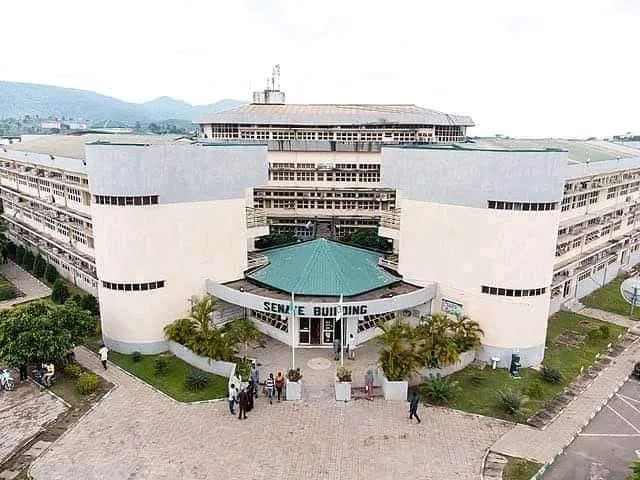
The Federal Capital Territory Administration (FCTA) has defended its decision to reduce the land allocated to the University of Abuja (UniAbuja), insisting that the action was based on recommendations made by a joint committee established in 2016 under the administration of former FCT Minister, Mohammed Musa Bello.
The administration said the decision was not independently initiated by the current FCT Minister, Nyesom Wike, but was based on findings and recommendations submitted by the committee, which comprised representatives of both the FCTA and the university.
According to the FCTA, the 12-member committee was inaugurated on November 10, 2016, to investigate land-related issues affecting the institution, including its land size, encroachment by indigenous settlers, illegal developments around its Gwagwalada Mini Campus and the issuance of title documents for its campuses.
The committee reportedly recommended reducing the university's original land allocation of more than 11,000 hectares to 100 hectares, citing the National Universities Commission's (NUC) recommended land size for universities.
However, the FCTA said the administration of Wike approved approximately 4,519.80 hectares for the institution, significantly more than the 100 hectares recommended by the committee.
In a statement issued by the Minister's Senior Special Assistant on Public Communications and Social Media, Lere Olayinka, the administration maintained that the land approved for the university was sufficient to accommodate its present and future developmental needs.
Olayinka argued that the approved land could accommodate more than 80,000 buildings if developed into plots of 500 square metres each.
The FCTA also accused the university of allocating portions of the disputed land to individuals, corporate organisations and government agencies, including the Economic and Financial Crimes Commission (EFCC), without obtaining the administration's approval.
The defence comes amid growing opposition from members of the university community, including students, alumni and staff unions, who have protested the reduction of the institution's original land allocation of approximately 11,824 hectares.
The protesting groups have raised concerns over the alleged transfer of portions of the university's land to private individuals and organisations, insisting that the institution's original allocation should be protected.
The disagreement has also moved to the courts, with the university filing a suit before the High Court of the Federal Capital Territory, Maitama, in Suit No. FCT/HC/CV/3500/2026.
The court reportedly directed parties on August 18, 2026, to maintain the status quo ante bellum regarding Plot No. 1, Giri District, pending the determination of the substantive matter.
The controversy has continued to generate debate over the university's land ownership, institutional expansion and the FCTA's authority to review land allocations within the
Federal Capital Territory.





0 Comments
No comments yet. Be the first to share your thoughts.
Leave a Comment