
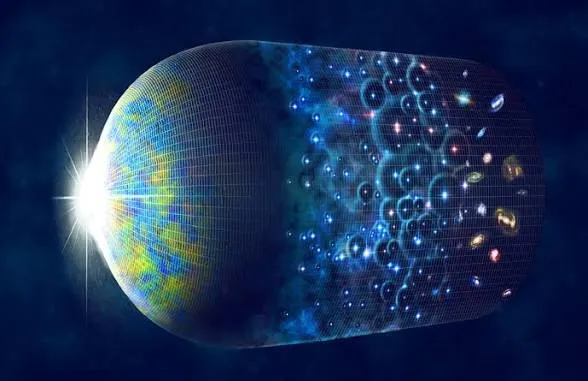
A new scientific study has reignited debate among astronomers over the age of the universe, with an alternative cosmological theory suggesting that the universe could be approximately 26.7 billion years old, nearly twice the widely accepted estimate of 13.8 billion years.
The research, associated with the University of Ottawa in Canada, explores an alternative explanation of how the universe evolved, challenging some long-standing assumptions about dark matter, dark energy and the expansion of the cosmos.
For decades, scientists have relied on the standard cosmological model, known as Lambda Cold Dark Matter (ΛCDM), which places the age of the universe at approximately 13.8 billion years. The model uses dark matter and dark energy to explain several major astronomical observations, including the movement of galaxies and the accelerating expansion of the universe.
However, the alternative model, known as Covarying Coupling Constants plus Tired Light (CCC+TL), proposes that changes in fundamental physical constants, alongside the gradual loss of energy by light travelling through space, could explain some of the phenomena traditionally attributed to dark matter and dark energy.
The research is associated with Rajendra Gupta, an adjunct professor in the University of Ottawa's Department of Physics, and postdoctoral researcher Dr. Nikolaos Samaras.
How the Theory Challenges Existing Scientific Beliefs
The researchers examined whether their alternative cosmological model could provide a different explanation for the universe's development and several astronomical observations.
Their analysis considered the formation of light elements, including hydrogen and helium, shortly after the Big Bang. They also examined observations of galaxies and their rotation patterns, including data from 175 galaxies contained in the SPARC database.
According to the researchers, their model produced results that could explain certain galactic rotation patterns without requiring the presence of dark matter.
The team also examined the Bullet Cluster, a pair of colliding galaxy clusters frequently studied in investigations into dark matter. Their findings were presented as an early demonstration of the model's potential, although further research is required.
James Webb Telescope Observations Could Offer Further Clues
The alternative theory could also provide a different explanation for the surprisingly mature galaxies observed by NASA's James Webb Space Telescope in the early universe.
Under the conventional cosmological model, the universe was approximately 300 million years old during the period known as cosmic dawn.
However, the alternative model suggests that the universe could have been considerably older at the same stage of cosmic history, potentially giving galaxies more time to form and develop.
Scientists believe further observations from the James Webb Space Telescope could help test the predictions of competing cosmological models and provide a clearer understanding of how the universe evolved.
Scientists Yet to Establish New Age of the Universe
Despite the intriguing findings, the proposed 26.7-billion-year age has not been established as the new scientific consensus.
The widely accepted estimate remains approximately 13.8 billion years, supported by extensive astronomical observations and the standard cosmological model.
The alternative theory remains a subject of scientific investigation and will require further testing against independent observations before it can challenge the prevailing understanding of the universe.
The research highlights the continuing efforts of astronomers and physicists to understand the origins, age and evolution of the cosmos.
The study, titled A Big Bang Nucleosynthesis Consistency Test of the CCC+TL Cosmology, was published in the scientific journal Universe.





0 Comments
No comments yet. Be the first to share your thoughts.
Leave a Comment