
The Federal Government has called on the National Assembly to suspend the approval and establishment of new federal universities, polytechnics and colleges of education across Nigeria for seven years.
The proposed suspension is aimed at addressing the challenges confronting existing tertiary institutions, including inadequate funding, poor infrastructure, shortage of qualified personnel and declining academic standards.
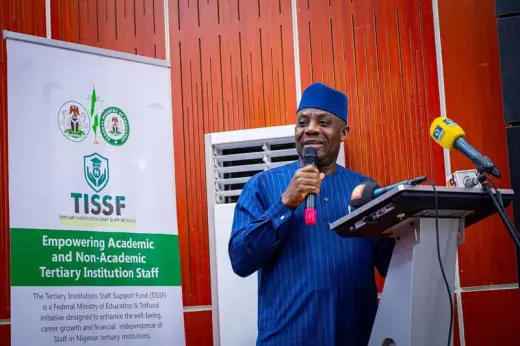
The Minister of Education, Dr Tunji Alausa, made the appeal in a memorandum dated November 2, 2026, addressed to the President of the Senate, Senator Godswill Akpabio.
In the memorandum, Alausa urged the leadership of the National Assembly and lawmakers to exercise restraint in considering bills seeking the establishment of additional federal tertiary institutions.
The minister explained that the Federal Executive Council (FEC), at its meeting on August 13, 2025, had approved a seven-year moratorium on the establishment of new federal universities, polytechnics and colleges of education.
According to him, the decision was informed by concerns over the increasing number of tertiary institutions, duplication of academic programmes, underutilisation of existing facilities and the government's limited capacity to adequately fund the institutions.
Alausa maintained that Nigeria's immediate priority should be strengthening existing tertiary institutions rather than expanding their numbers without adequate financial and infrastructural support.
He also highlighted the funding challenges facing public universities, disclosing that out of the ₦1.3 trillion pledged by the Federal Government for university revitalisation between 2013 and 2018, only ₦250 billion was reportedly released between 2013 and 2021.
Similarly, he stated that of the additional ₦150 billion approved in 2025 for the Needs Assessment Intervention, only ₦50 billion had initially been released.
The minister warned that establishing more institutions without sustainable funding arrangements could worsen the existing challenges and place additional financial burdens on successive administrations.
He identified inadequate lecture halls, overcrowded classrooms, insufficient laboratories, accommodation shortages, deteriorating facilities and a shortage of qualified academic personnel as some of the major problems affecting existing federal tertiary institutions.
Alausa further argued that creating additional institutions under the current circumstances could stretch available resources and undermine the quality of education across the country.
As part of his justification, the minister cited institutional reviews and consolidation efforts in Ekiti and Imo states, where challenges associated with maintaining multiple tertiary institutions had necessitated administrative adjustments.
Meanwhile, the Senate has taken steps towards enforcing the proposed policy.
The Senate Leader, Senator Opeyemi Bamidele, announced on November 4, 2026, that lawmakers had been directed to suspend the processing of bills seeking to establish new universities and other tertiary institutions.
Senate President Godswill Akpabio also disclosed that President Bola Tinubu had discussed the matter with the leadership of the National Assembly.
The proposed seven-year moratorium is expected to give existing federal tertiary institutions time to improve their infrastructure, strengthen academic standards and establish more sustainable funding arrangements before further expansion is considered.
The policy, however, does not amount to a permanent ban on the establishment of new institutions but represents a temporary measure to address structural and financial challenges within Nigeria's tertiary education system.


0 Comments
No comments yet. Be the first to share your thoughts.
Leave a Comment