
The Federal Government has commenced the process of installing a 63MVA power transformer and an associated 132kV double-circuit transmission line in Ila-Orangun, Osun State, in a major electricity infrastructure project expected to improve power supply across six local government areas.
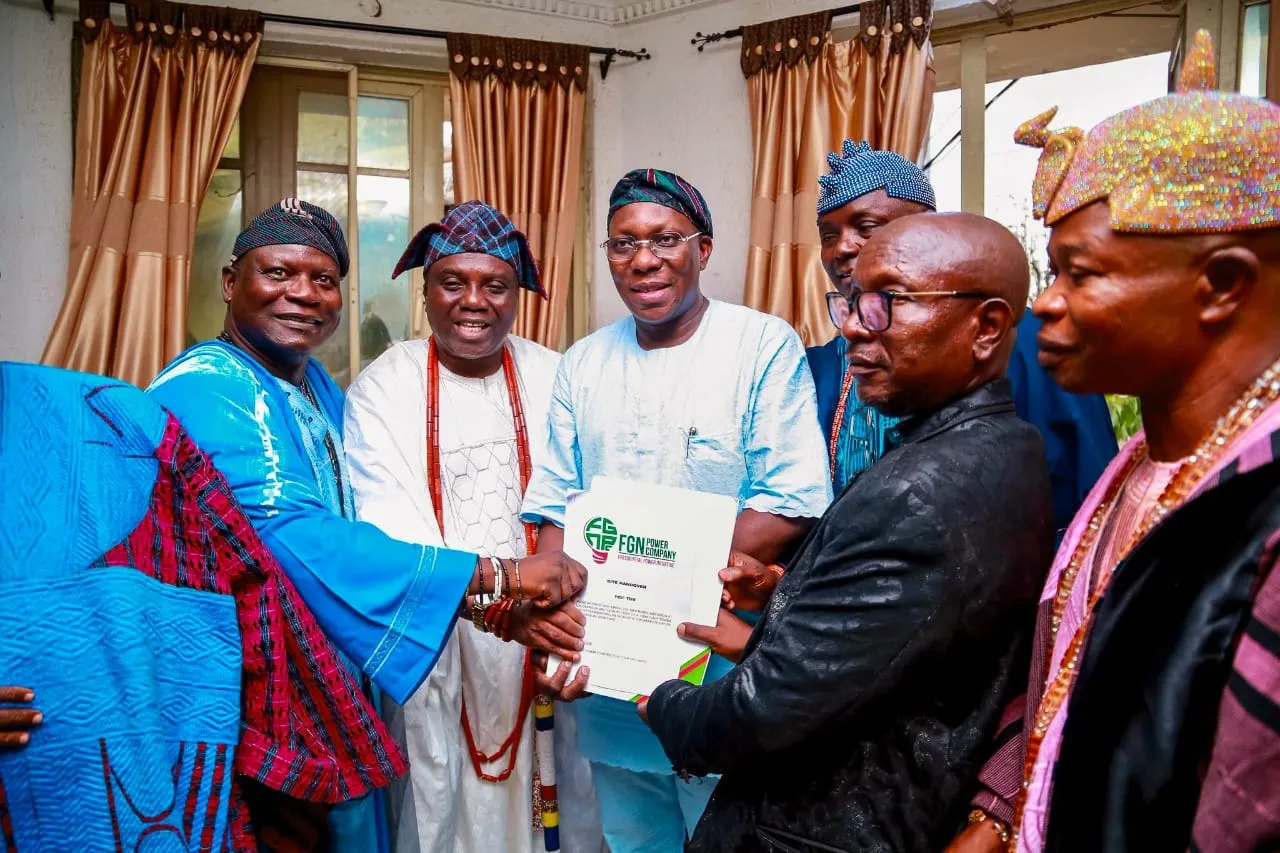
The project, facilitated by Senator Olubiyi Fadeyi, who represents Osun Central Senatorial District, reached a significant milestone on Tuesday with the formal handover of the project site to the contractor.

The project is expected to be completed within 14 months and is designed to strengthen electricity distribution and transmission capacity in the benefiting communities.
The handover ceremony attracted prominent traditional rulers, government officials, political leaders and other stakeholders, including the Orangun of Ila-Orangun, the Aragbiji of Iragbiji and the Oluresi traditional rulers.
Speaking at the event, the Managing Director of the Federal Government of Nigeria Power Company, Kenny Anuwe, represented by the Coordinator of Transmission Lines, Abuja, Leo Ogwu, described the project as an important step in the Federal Government's efforts to strengthen Nigeria's electricity transmission infrastructure.
Anuwe emphasised that the project must deliver tangible benefits to residents, urging the contractor to maintain professionalism, technical competence and strict adherence to the approved completion timeline.

He also commended Senator Fadeyi for facilitating the project and acknowledged the contributions of the Transmission Company of Nigeria (TCN), contractors, consultants and other stakeholders towards its actualisation.
In his remarks, Senator Fadeyi expressed appreciation to President Bola Ahmed Tinubu for approving the project. He also acknowledged the contributions of former Osun State Governor, Chief Bisi Akande, whom he credited with playing an important role in ensuring the project became a reality.

According to the senator, the project will benefit six local government areas: Ila, Ifedayo, Boluwaduro, Boripe, Odo-Otin and Ifelodun.
He said the initiative was expected to significantly improve electricity supply in the benefiting communities, with the areas targeted for Band A electricity service upon completion.
Fadeyi disclosed that the journey towards securing the project began in 2024 and required two years of engagements and efforts before reaching the implementation stage.
He also acknowledged the contributions of former Minister of Power, Adebayo Adelabu, and the current Minister, Joseph Tegbe, towards facilitating the project.

Describing the intervention as a major development for the region, the senator said residents had endured years of unstable electricity supply.
He stated that full-scale construction was expected to commence the following week, while the entire project was scheduled for completion within 14 months.
Beyond the transformer installation, Fadeyi announced plans to distribute free prepaid electricity meters to constituents, beginning with an initial batch of 1,000 meters.
He explained that the distribution would be implemented in three phases to enable residents to benefit directly from the improved electricity infrastructure.

TRADITIONAL RULERS, ROYAL FATHERS ATTEND CEREMONY
The ceremony witnessed the presence of traditional rulers and representatives of several traditional institutions across Osun State, highlighting the importance attached to the project by communities in the region.
Among those represented were the Orangun of Ila-Orangun, Orangun of Oke-Ila, Aragbiji of Iragbiji, Aree of Iree, Oloyan of Oyan, Olona of Ada, Alagba of Aagba, Kabiyesi of Igbajo, Owa of Otan, Akesin of Ora and Asoni of Ora.
Others included traditional rulers from Ororuwo, Iba, Eko-Ende, as well as the Alasi, Asaba, Oloku, Oninisha and Ajaba traditional institutions.
The Akinriun-in-Council was also represented by the Essa of Ikirun.
The project is expected to serve as a major electricity infrastructure intervention for Osun Central, with its successful completion anticipated to improve access to electricity, support businesses and stimulate economic activities across the six benefiting local government areas.



0 Comments
No comments yet. Be the first to share your thoughts.
Leave a Comment