

By John Ademola | PressPoint News
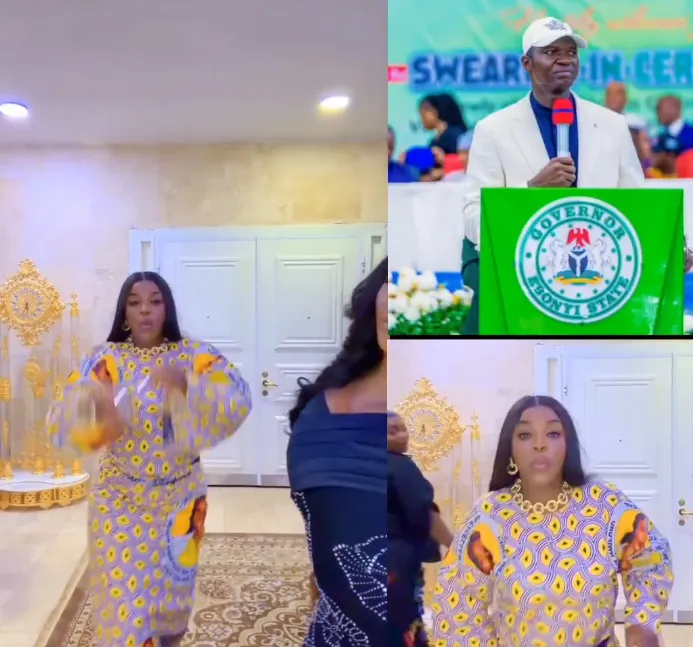
A video featuring the First Lady of Ebonyi State, Chief Mrs. Mary-Maudline Uzoamaka Nwifuru, participating in a TikTok dance challenge with friends has sparked a lively conversation across social media, with Nigerians expressing contrasting views over the light-hearted moment.
The video, which began circulating widely online over the weekend, shows the First Lady joining a group of women in a coordinated dance routine associated with a trending TikTok challenge.
Rather than appearing at an official government engagement, Mrs. Nwifuru is seen in a relaxed setting, dancing alongside her friends and appearing to enjoy the moment.
The footage has since attracted significant attention on social media, with reactions ranging from praise for her relaxed and relatable personality to criticism from those who believe public office holders should maintain a more restrained public image.
‘Let Her Have Fun’ — Supporters React
For many social media users, the video was nothing more than a glimpse of the First Lady enjoying a personal moment with friends.
Some praised her for showing a more human and approachable side beyond her official responsibilities.
Supporters argued that occupying a public position does not remove a person's right to socialise, celebrate or participate in popular cultural trends.
Others viewed the moment as evidence that public figures can connect with younger Nigerians through the same digital platforms they use every day.
The reactions reflect the growing role of social media in shaping the public image of political figures, particularly as platforms such as TikTok increasingly blur the boundary between official communication and personal expression.
Critics Question the Optics
Not everyone, however, welcomed the video.
Some commenters used the opportunity to raise questions about the image of public office and whether a serving First Lady should participate in viral social media trends.
Others linked their criticism of the video to wider political conversations surrounding the Ebonyi State administration, arguing that public figures are inevitably judged not only by their official activities but also by the content they associate themselves with online.
The debate has therefore extended beyond the dance itself, with some Nigerians questioning where the line should be drawn between a public official's private life and public persona.
A First Lady With a Strong Public Profile
Mrs. Nwifuru, wife of Ebonyi State Governor Francis Ogbonna Nwifuru, has maintained a visible public profile through her advocacy and social intervention activities.
The Ebonyi State Government identifies her as the First Lady of the state and founder of the Better Health for Rural Women, Children and Internally Displaced Persons Foundation (BERWO). Her public engagements have included initiatives focused on women, children, healthcare and vulnerable communities.
That established public profile has arguably contributed to the level of interest generated by the TikTok footage.
For a personality who is regularly seen in official and humanitarian engagements, the sight of her participating in an informal dance challenge represents a noticeably different side of her public image.
Social Media Has Changed the Rules
The episode illustrates a broader reality confronting public figures in the digital age.
Years ago, moments away from official duties could remain private. Today, a few seconds captured on a smartphone can quickly become a nationwide talking point.
Political figures, celebrities and public personalities are increasingly expected to navigate two identities simultaneously — the formal public persona and the more informal personality presented through social media.
The Ebonyi First Lady's video demonstrates how easily the two can collide.
To some viewers, she is simply a woman enjoying herself with friends.
To others, she remains a public figure whose actions are naturally subjected to public scrutiny.
Beyond the Dance: What the Reactions Reveal
Interestingly, the strongest debate surrounding the video appears to have less to do with the actual dance and more to do with expectations of public figures.
Supporters see authenticity.
Critics see optics.
Both reactions point to the same reality: Nigerians increasingly expect public officials and their families to be visible, accessible and relatable, but they also expect them to maintain an image consistent with the responsibilities attached to their positions.
This creates a delicate balancing act.
A public figure who appears too distant may be criticised for being disconnected from ordinary citizens. One who appears too casual may face questions about the dignity associated with public office.
The Video Continues to Generate Conversation
As the clip continues to circulate, there has been no indication of any official controversy arising from the First Lady's participation in the challenge.
Rather, the episode has become another example of how ordinary social-media moments involving public personalities can rapidly develop into wider public conversations.
Whether viewed as harmless entertainment, a display of relatability or a subject worthy of political scrutiny, one thing is clear: the Ebonyi First Lady's TikTok moment has successfully captured the attention of the internet.
And in the age of viral politics, sometimes a few seconds of dance can generate a conversation far beyond the dance floor.
John Ademola
PressPoint News


0 Comments
No comments yet. Be the first to share your thoughts.
Leave a Comment