

Uganda has denied having any confirmed active Ebola cases following Nigeria’s announcement of an Ebola infection in the Federal Capital Territory (FCT), Abuja, involving a woman who reportedly travelled through Uganda.
The clarification has drawn attention to the patient’s travel history and the ongoing investigation into where she contracted the virus. However, Uganda’s denial of active cases does not, by itself, contradict Nigeria’s confirmation of the infection, and there is currently no established evidence that the Nigerian government deliberately misrepresented the incident.
Uganda Explains Patient’s Travel History
Uganda’s Ministry of Health said preliminary information indicated that the Nigerian woman had travelled to eastern Democratic Republic of the Congo (DR Congo) for business before transiting through Uganda in early October.
According to the ministry, the woman reportedly showed no symptoms while in Uganda but developed symptoms after arriving in Nigeria.
Ugandan health authorities maintained that the patient’s transit through the country was not sufficient evidence to conclude that she contracted the virus there.
The ministry also indicated that further information about the woman’s travel itinerary, clinical history and possible exposure was necessary to establish the likely source of the infection and determine whether additional contact tracing measures were required.
Uganda maintained that it had no confirmed active Ebola cases at the time of its statement, following the declaration of the end of its previous outbreak in July 2026.
Nigeria Confirms Ebola Infection in Abuja
Nigeria’s Federal Government confirmed an imported case of Ebola Bundibugyo virus disease on October 20, 2026, after laboratory testing of a female patient receiving medical care in Abuja.
The Coordinating Minister of Health and Social Welfare, Professor Muhammad Ali Pate, said the patient developed symptoms on October 7, four days after arriving in Nigeria, and sought medical attention at a private health facility in Abuja on October 11.
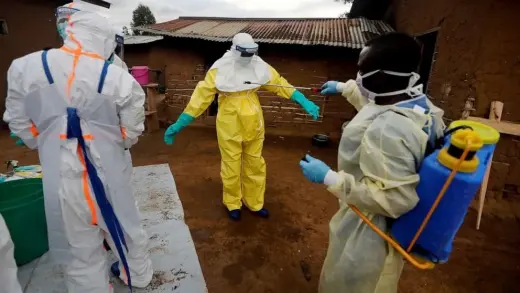
Following confirmation of the infection, the patient was isolated and placed under medical care as health authorities intensified efforts to prevent further transmission.
Nigerian authorities also initiated contact tracing and surveillance measures to identify and monitor people who might have been exposed to the virus.
The response included monitoring identified contacts, strengthening infection-prevention procedures and increasing vigilance at points of entry.
Where Did the Patient Contract the Virus?
The central issue surrounding the incident is the location where the patient contracted the infection.
While Nigeria’s announcement identified the patient’s travel through Uganda, Ugandan authorities said she had shown no symptoms during her transit through the country and that her infection could not automatically be attributed to Uganda.
Her reported visit to eastern DR Congo is also significant because the Ebola Bundibugyo virus outbreak has been associated with the region.
Nevertheless, the patient’s travel history alone cannot conclusively establish where transmission occurred. Determining the source requires epidemiological investigations into her movements, possible exposure to infected individuals and the timing of symptom onset.
Until those investigations are completed, it would be premature to assign responsibility for the infection to any particular country.
Health Authorities Intensify Surveillance
Following Nigeria’s confirmation of the case, health authorities stepped up public health measures, including patient isolation, contact tracing, disease surveillance and infection-prevention protocols.
The World Health Organisation has emphasised the importance of coordinated surveillance, rapid identification of suspected cases and effective cross-border cooperation in responding to infectious disease threats.
Members of the public have been advised to remain calm, follow official health guidance and cooperate with health officials carrying out contact tracing and other response activities.
The situation also highlights the importance of timely information-sharing between countries, particularly when patients have travelled across international borders before receiving a diagnosis.
Uganda’s denial of active Ebola cases has added an important dimension to the public discussion surrounding Nigeria’s confirmed infection in Abuja. However, the two statements address different issues: Nigeria has confirmed the patient’s infection, while Uganda has denied having an active outbreak and disputed any assumption that the patient necessarily contracted the virus within its territory.
The critical question remains where the woman was exposed to the virus. Until investigations establish the likely source of infection, claims that either government deliberately misled the public should be treated with caution.
For both countries, the immediate priority remains protecting public health through transparent communication, effective contact tracing and coordinated disease surveillance.



0 Comments
No comments yet. Be the first to share your thoughts.
Leave a Comment