
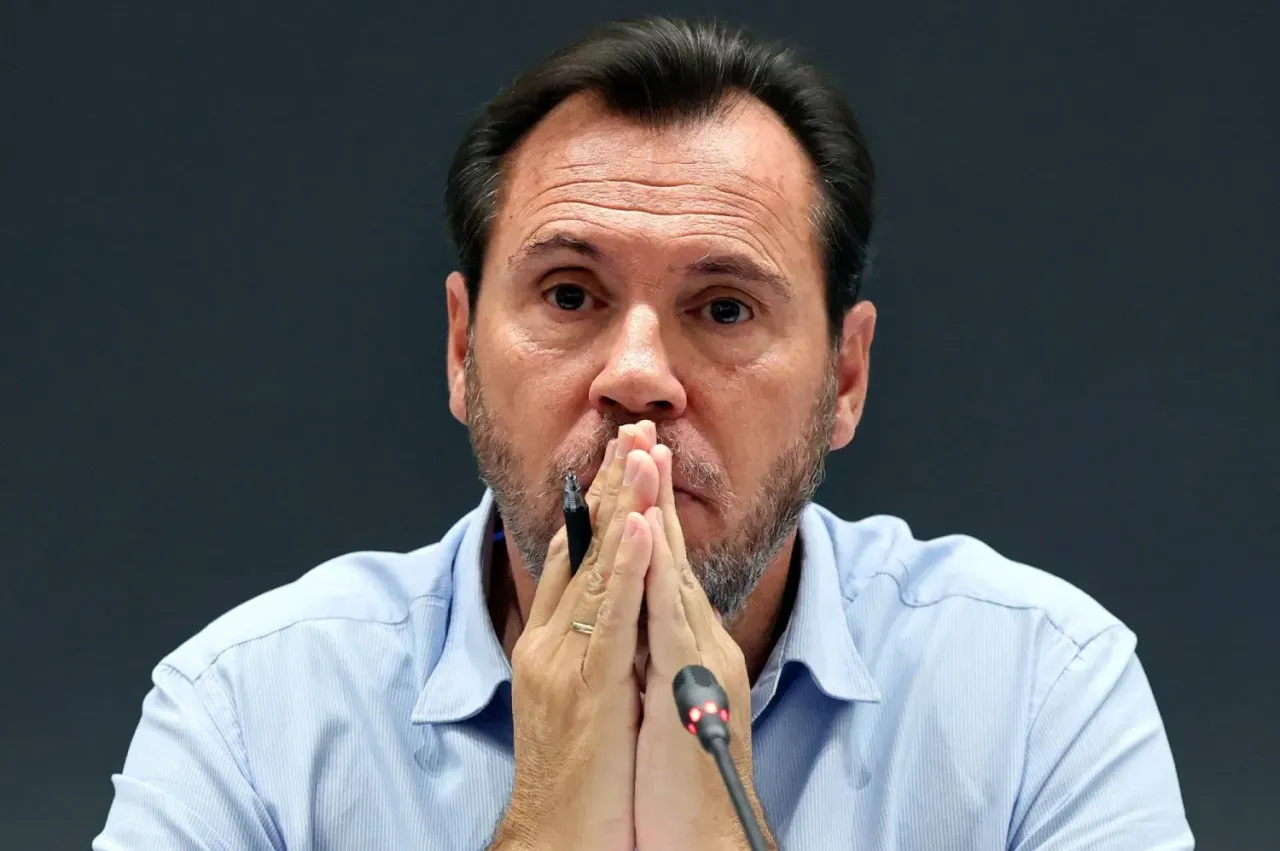
Spain’s Transport Minister, Óscar Puente, has resigned from his position and withdrawn from the country’s November 29 general election following a deadly train collision that claimed 69 lives.
Puente announced his decision on Tuesday, November 3, 2026, at the end of an hours-long appearance before lawmakers, where he addressed questions surrounding the October 28 disaster and the state of the country’s railway safety system.
The minister said he could no longer remain in office after two major train accidents within less than a year, although he maintained that his decision was an act of political responsibility and solidarity with the victims.
"I am not only stepping down from my position as Minister of Transport, but I am also withdrawing my name from the lists for the early legislative elections on November 29," he told lawmakers.
His resignation came after mounting pressure from opposition parties and railway workers' unions, who had criticised his handling of the disaster and demanded greater accountability.
The crash occurred near Urda, in Spain's central Toledo province, when a high-speed train operated by state-owned Renfe collided with a stationary train belonging to private operator Iryo on the Madrid-Seville railway line.
Preliminary information presented by the minister indicated that a failure in the railway's automatic safety and communication systems led to trains being stopped along a section of the Madrid-Seville route. However, railway controllers subsequently authorised the Renfe train to continue despite the presence of the stationary Iryo train ahead.
The collision was estimated to have occurred at a speed of between 160 and 200 kilometres per hour, according to reports on the preliminary investigation.
The October disaster was the second major fatal train accident in Spain this year. In January, another collision near Adamuz, in the southern province of Córdoba, claimed 46 lives, raising further concerns about railway safety across the country.
Before announcing his resignation, Puente outlined several measures aimed at preventing future accidents and restoring public confidence in Spain's railway network.
The proposed measures include accelerating the introduction of the European Rail Traffic Management System (ERTMS), improving conditions for railway control-centre workers and deploying artificial intelligence to monitor communications between train drivers and controllers to identify operational irregularities.
The government also announced a €30 million compensation package for victims and their families, alongside measures to increase insurance payouts and speed up compensation payments.
Puente's departure marks a significant political development for Prime Minister Pedro Sánchez's government, coming less than four weeks before the November 29 general election.
The twin railway disasters have placed transport safety and government accountability at the centre of Spain's political debate, with growing calls for stronger oversight and improved safety standards across the country's high-speed rail network.



0 Comments
No comments yet. Be the first to share your thoughts.
Leave a Comment