
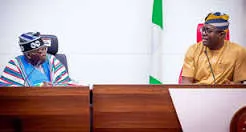
As political conversations ahead of Nigeria’s 2027 general elections gather momentum, the possibility of Oyo State Governor Seyi Makinde seeking the presidency has become a subject of debate among political observers.
While loyalists of President Bola Tinubu in the South-West may argue that Makinde does not pose a serious electoral challenge, supporters of the governor and other opposition figures could view his potential candidacy as an opportunity to reshape the region’s political landscape.
The argument that Makinde could present a challenge to Tinubu is rooted in his position as a sitting governor, his political network in Oyo State and the strategic importance of the South-West in national electoral calculations.
However, the extent of any challenge would depend on whether Makinde formally enters the presidential race, the platform he contests on, the strength of his alliances and his ability to attract support beyond his home state.
Why Makinde Could Matter in the 2027 Race
Makinde, a member of the Peoples Democratic Party (PDP), has maintained a prominent position in South-West politics during his tenure as governor of Oyo State.
A potential presidential bid would place him in direct competition with other political figures seeking to influence the direction of the region and the country.
For the ruling All Progressives Congress (APC), the South-West remains politically significant because of its electoral importance and its association with Tinubu's political base.
A credible opposition candidate with established regional connections could complicate efforts to maintain a unified voting bloc. Nevertheless, regional popularity does not automatically translate into nationwide electoral strength.
Makinde would need to demonstrate broad national appeal, build alliances across geopolitical zones and establish a clear policy agenda capable of attracting voters beyond Oyo State.
The South-West Political Equation
The South-West is not a politically uniform region, and its voters have historically supported different parties and candidates depending on the election, local interests and prevailing political circumstances.
Oyo State, in particular, has experienced competitive electoral contests, making Makinde's political standing relevant to discussions about opposition strategy.
If Makinde decides to contest the presidency, his ability to work with other opposition leaders could become an important factor in determining his influence.
The outcome would also depend on the APC's candidate-selection process, the strength of its political machinery and the issues that dominate the national campaign.
Consequently, dismissing Makinde's potential candidacy without examining these factors could overlook important political variables. Equally, describing him as a decisive threat to Tinubu before the emergence of confirmed candidacies and reliable electoral evidence would be premature.
What It Could Mean for Tinubu
For Tinubu and the APC, the emergence of a well-organised opposition candidate from the South-West could create additional competition for voters and political allies.
However, the impact would depend on the scale of the candidate's support, the cohesion of opposition parties and the ability of the ruling party to retain its own electoral coalition.
There is currently insufficient evidence to conclude that Tinubu personally considers Makinde a serious threat. Such a claim would require a direct statement or credible reporting based on verifiable sources.
What can be said is that the prospect of a competitive opposition candidacy makes the South-West an important region to watch as political parties prepare for 2027.
The Road to 2027
As the next election cycle approaches, discussions surrounding Makinde's presidential prospects are likely to remain part of broader debates about opposition unity, regional influence and the future of Nigeria's party system.
Whether the Oyo governor eventually seeks the presidency remains a critical question. If he does, his political alliances, policy proposals and national support will help determine the extent of his influence on the contest.
For now, the suggestion that Makinde could complicate Tinubu's re-election calculations remains a political assessment rather than an established electoral outcome.
The coming months are likely to provide a clearer picture of the ambitions, alliances and strategies of the political figures positioning themselves for 2027.

0 Comments
No comments yet. Be the first to share your thoughts.
Leave a Comment