
The history of the National Union of Road Transport Workers (NURTW) is much older and more complex than the way it is often presented in public discussions.
While the NURTW, as a formally established national trade union, dates back to 1978, its historical roots can be traced to the development of organised motor transport associations in Nigeria during the 1930s.
Understanding this distinction is important in any serious discussion about the origin, purpose and evolution of the union.
Where Did NURTW Really Come From?
Organised road transport unionism in Nigeria began during the colonial era, when motor transportation was rapidly expanding.
One of the earliest significant organisations was the Nigerian Motor Transport Union (NMTU), which emerged around 1932. At that time, motor-lorry owners and operators were becoming increasingly important in the movement of people and goods across the country.
The early transport associations were established largely to protect the interests of their members, particularly in relation to government taxation, regulations, road safety and operating conditions.
The NMTU therefore represents an important part of the historical foundation of Nigerian transport unionism.
However, it should not be confused with the NURTW itself.
1932 or 1978: Which Is the Correct Date?
This is one of the major questions surrounding the history of NURTW.
The answer depends on what exactly is being discussed.
1932 represents an important date in the history of organised motor transport unionism in Nigeria.
1978, on the other hand, represents the formal establishment of the National Union of Road Transport Workers as a national industrial union.
In 1978, the Federal Government undertook a major restructuring of Nigeria's trade-union system.

Several existing transport-worker unions were brought together under a national structure, resulting in the establishment of NURTW.
Therefore, it is historically more accurate to say that:
«The roots of NURTW can be traced to transport unionism of the 1930s, but NURTW itself was formally established in 1978.»
Why Was NURTW Established?
The original purpose of NURTW was fundamentally different from some of the public perceptions surrounding the organisation today.
It was established as a trade union representing road transport workers.
Its responsibilities included protecting workers' interests, negotiating with authorities, promoting safer transportation and providing a collective platform for transport workers.
The union was not originally created as a political organisation or as a structure for controlling motor parks.
Its foundation was rooted in the broader development of trade unionism in Nigeria.
The 1978 Restructuring
The creation of NURTW was part of a much wider Federal Government effort to reorganise Nigeria's fragmented trade-union system.
At the time, numerous small unions existed across different industries and geographical areas.
The government sought to consolidate them into stronger national industrial unions.

In the transport sector, several existing organisations were consequently brought together under the NURTW structure.
This makes the history of NURTW different from that of an organisation founded by one individual.
NURTW was essentially the product of an institutional amalgamation and restructuring of existing transport-worker unions.
NURTW and RTEAN Are Not the Same Organisation
Another issue that deserves clarification is the relationship between NURTW and the Road Transport Employers Association of Nigeria (RTEAN).
Although both emerged within the wider restructuring of the transport sector, they were created to represent different interests.
NURTW was designed primarily to represent road transport workers, while RTEAN represented road transport employers and owners.
This distinction is important because the two organisations have sometimes been discussed as though they have the same historical origin and mandate.
How Did NURTW Become Powerful?
The role of NURTW changed significantly over the decades following its establishment.
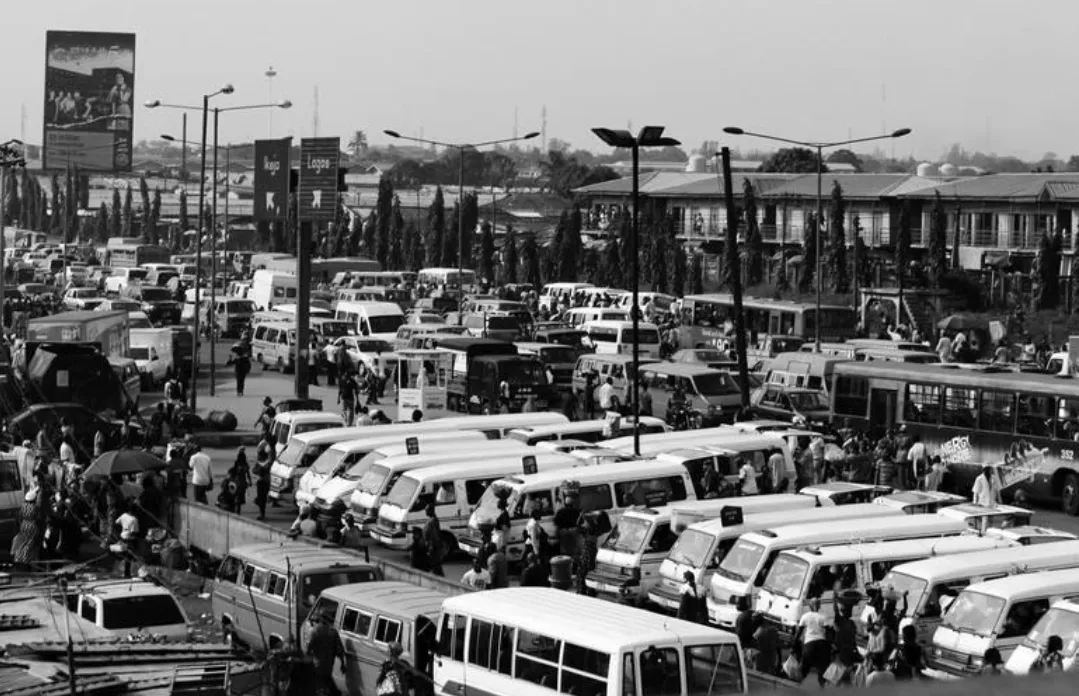
As commercial road transportation expanded and motor parks became important centres of economic activity, the union's influence also increased.
Its activities gradually extended beyond conventional trade-union representation into the organisation of drivers, management of loading arrangements, collection of dues, dispute resolution and coordination of activities within motor parks.
This growing influence gave some union structures considerable grassroots power.
When Did Politics Enter the Picture?
The political dimension of NURTW developed considerably after its establishment.
Because transport workers operate across virtually every community and major urban centre, the union developed an extensive grassroots network.
Political actors increasingly recognised the organisational value of that network.
Over time, some union leaders became involved in political mobilisation and electoral activities.
This contributed to the perception of NURTW as more than a conventional labour organisation.

However, it is important to distinguish between the original purpose of the union and the political influence it acquired over time.
NURTW was not created in 1978 as a political organisation.
Its political importance developed subsequently.
From Trade Union to Motor Park Power
One of the most significant questions for discussion today is how an organisation originally established to represent workers became so influential in the management of motor parks and road transportation.
This evolution raises important questions about the relationship between:
- trade unions and government;
- transport workers and transport owners;
- motor parks and local authorities;
- union leadership and political actors;
- transport regulation and grassroots power.
It also raises questions about whether some responsibilities traditionally associated with government regulation have, over time, become intertwined with union activities.
What Has Changed?
The NURTW of today operates in an environment that is very different from the Nigeria of the 1930s and 1970s.
The country's population has expanded dramatically. Commercial transportation has become a major part of urban life, while motor parks have developed into important economic and social centres.
Consequently, the influence attached to transport unions has also increased.
At the same time, controversies surrounding motor-park control, dues collection, factional disputes, violence and political involvement have generated public debate about the future of the union.
The Central Question for Today's Press Discussion
If NURTW was originally established as a trade union for road transport workers, how did it evolve into one of the most influential grassroots organisations in Nigeria's transport and political landscape?
And more importantly:
Should NURTW return to its original trade-union responsibilities, or should its role in motor-park administration and transport regulation be formally redefined by government?
Questions for the Press Discussion
1. What is the true historical origin of NURTW?
2. Should 1932 or 1978 be regarded as the beginning of NURTW?
3. What was the role of the Nigerian Motor Transport Union in the development of modern transport unionism?
4. Why did the Federal Government restructure the transport unions in 1978?
5. Which existing unions were amalgamated to create NURTW?
6. What was the original mandate of NURTW?
7. When and why did NURTW's influence extend beyond conventional trade-union activities?
8. How did motor parks become central to the union's economic and organisational power?
9. When did political actors begin to recognise and utilise the grassroots strength of transport unions?
10. What is the historical difference between NURTW and RTEAN?
11. Should motor-park administration be handled by transport unions or government agencies?
12. How can the rights and welfare of genuine transport workers be protected without allowing union structures to become instruments of intimidation or political violence?
13. What reforms are necessary to return NURTW to a modern, accountable trade-union structure?
14. Can government regulate motor parks effectively without undermining legitimate trade-union rights?
15. What lessons can Nigeria learn from the nearly century-long history of organised road transport unionism?

Conclusion
The history of NURTW is not simply the story of motor parks, drivers or contemporary political controversies.
It is a story that stretches back to the colonial development of motor transportation in Nigeria, through the emergence of organised transport associations in the 1930s, the expansion of trade unionism, the 1978 Federal Government restructuring, and the eventual growth of NURTW into a powerful grassroots institution.
The most accurate historical position is therefore that 1932 represents an important root of organised motor-transport unionism, while 1978 marks the formal establishment of NURTW as a national industrial union.
Understanding that distinction provides a stronger foundation for discussing what NURTW was created to do, what it has become, and what its role should be in the future of Nigeria's transport sector.


0 Comments
No comments yet. Be the first to share your thoughts.
Leave a Comment