
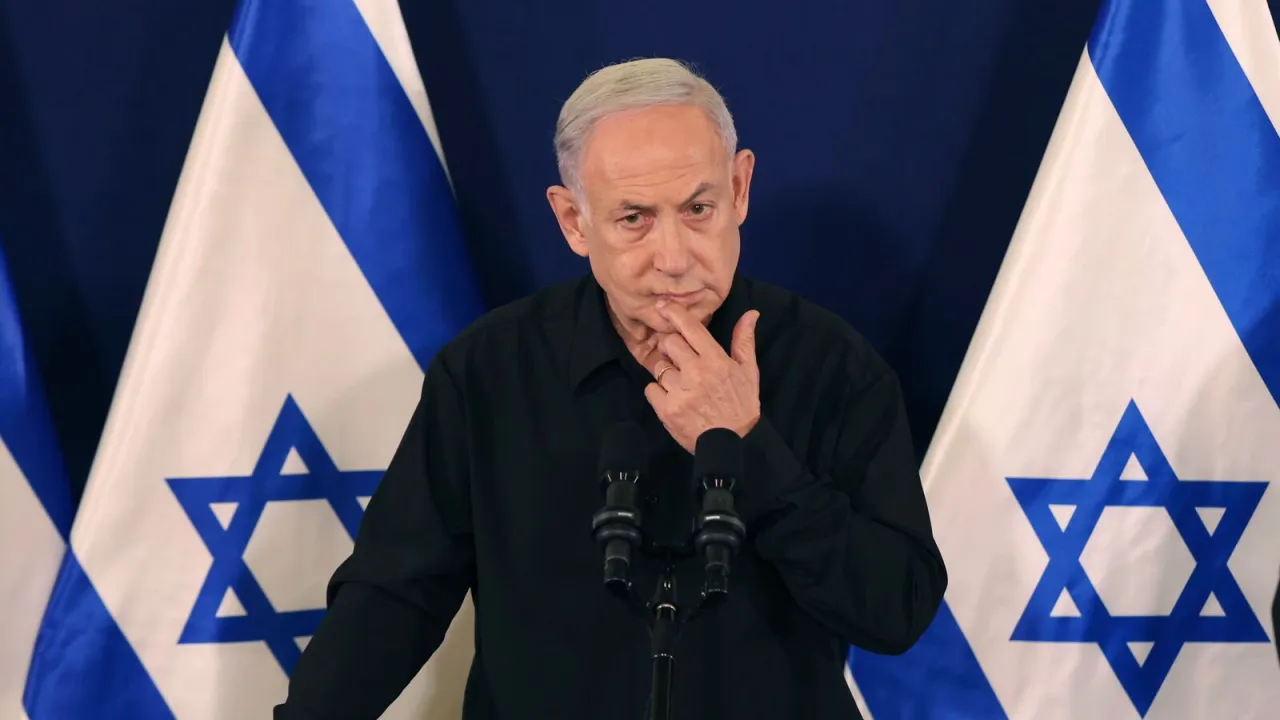
Israeli Prime Minister Benjamin Netanyahu has suffered a major political setback after Israel's Central Elections Committee officially certified the results of the October 27 parliamentary election, confirming that his governing bloc has lost its parliamentary majority.
The certification, announced on Wednesday, November 4, followed a review of complaints and allegations of electoral irregularities raised by Netanyahu's Likud party and its allies.
According to the final results, Netanyahu's right-wing bloc secured 53 seats in the 120-member Knesset, while the opposition bloc led by former military chief Gadi Eisenkot won 48 seats.
The two Arab-led political groupings, the Joint List and Ra'am, secured a combined 19 seats, representing a record performance.
Under Israel's parliamentary system, a minimum of 61 seats is required to command a majority and form a government.
The outcome marks a significant decline for Netanyahu's coalition, which controlled 68 seats in the outgoing parliament.
Election Commission Rejects Fraud Allegations
The certification came amid controversy over allegations by Netanyahu's allies that Arab-led parties had manipulated the election results, with suggestions of possible foreign interference.
However, the Central Elections Committee said its examination of 9,069 polling stations found no irregularities capable of compromising the integrity of the election or changing its outcome.
The committee maintained that the final results accurately reflected the choices made by Israeli voters.
Supreme Court Justice Noam Sohlberg, who chairs the election committee, also warned that attempts to cast doubt on the credibility of the electoral process posed a threat to Israeli democracy.
Netanyahu's Likud party and some of its allies had opposed the certification process, but the committee proceeded with the official announcement.
Opposition Faces Challenge in Forming Government
Despite Netanyahu's loss of a parliamentary majority, the opposition has yet to secure the numbers needed to independently establish a new government.
Eisenkot's bloc, with 48 seats, would require support from some or all of the Arab-led parties to reach the 61-seat threshold.
However, potential cooperation remains politically sensitive, given longstanding disagreements among Israeli political factions over the participation of Arab parties in government.
The election outcome has therefore created a complicated political situation, with both Netanyahu's allies and opposition leaders facing difficult coalition negotiations.
President Herzog Begins Government Formation Process
Following the certification, the official results were submitted to Israeli President Isaac Herzog, who is expected to consult representatives of the elected political parties before deciding which leader should receive the mandate to form the next government.
The process could involve extensive negotiations as political parties attempt to secure enough parliamentary support to establish a governing coalition.
If no candidate succeeds in forming a government, Israel could face another general election.
Although Netanyahu remains prime minister for now, the election outcome has significantly weakened his political position and raised fresh uncertainty over the future of his government.



0 Comments
No comments yet. Be the first to share your thoughts.
Leave a Comment