
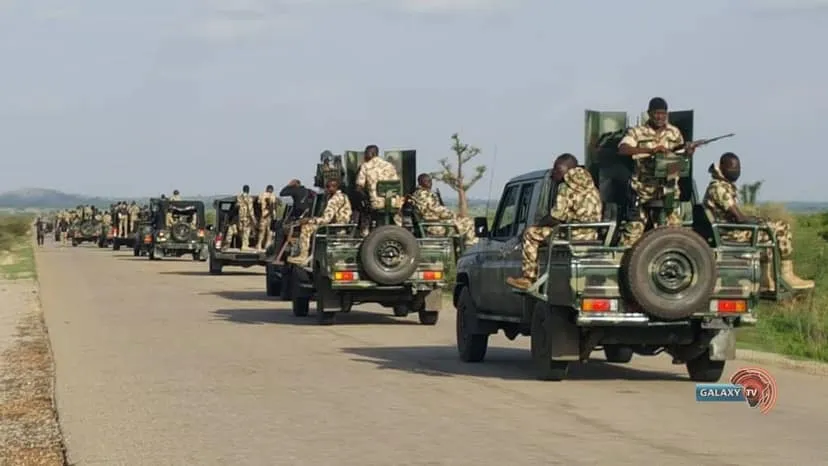
ABUJA — The Federal Government has disbursed approximately ₦5.15 trillion in special intervention funds to the Nigerian military and related security agencies between November 2023 and September 2026, despite persistent security challenges across several parts of the country.
The figures, obtained from financial records analysed by The Punch, show that the government received ₦5.65 trillion into a dedicated special intervention account during the period, out of which ₦5.15 trillion had been disbursed as of the latest available records.
The disbursements represent approximately 91.15 per cent of the total funds received under the intervention programme.
The financial records, prepared by the Federation Account Department of the Office of the Accountant-General of the Federation, were presented to the Technical Sub-Committee of the Federation Account Allocation Committee at its October 14, 2026 meeting in Abuja.
A breakdown of the figures indicates that the government released ₦2.75 trillion under the special intervention programme in 2026 alone, representing more than half of the total disbursements recorded since the programme commenced.
This compares with approximately ₦1.2 trillion disbursed in 2024, highlighting a substantial increase in special security funding.
The intervention programme is separate from the regular annual budgetary allocations to the Ministry of Defence and other security institutions, suggesting that the total resources available to the country's security agencies are higher when conventional budgetary funding is included.
However, the financial records did not provide a detailed breakdown of the specific military operations, equipment purchases, personnel expenses or security projects financed through the intervention funds.
The development comes amid continuing security concerns involving terrorism, banditry, kidnapping, insurgency and other violent crimes in different parts of Nigeria.
Several communities across the North-West, North-East and North-Central regions continue to face attacks, abductions and displacement, while other parts of the country have also experienced security-related incidents.
The growing expenditure on security has therefore renewed questions about the relationship between government spending and the actual security situation confronting Nigerians.
Although increased funding may be necessary to strengthen military operations, acquire modern equipment, improve intelligence gathering and support personnel, financial transparency remains essential to determining whether public resources are being effectively utilised.
The absence of a detailed public breakdown of the intervention expenditure also raises questions about the level of oversight and the mechanisms available to assess the performance of the funded operations.
Meanwhile, the National Security Adviser, Nuhu Ribadu, has disclosed that the Federal Government is reviewing the country's existing security strategy to develop a new National Security Strategy 2026.
The review is expected to address evolving threats, including terrorism, banditry, kidnapping, cybercrime, misinformation, economic vulnerabilities and food insecurity.
The latest financial figures present an important opportunity for the government to demonstrate how increased security spending is translating into improved operational capacity, safer communities and reduced criminal activities.
For Nigerians who continue to experience insecurity, the ultimate measure of security expenditure is not simply the amount released but the extent to which it protects lives, secures communities and restores confidence in the country's security institutions.
Press Point News will continue to examine public spending, national security and the impact of government policies on ordinary Nigerians.

0 Comments
No comments yet. Be the first to share your thoughts.
Leave a Comment