
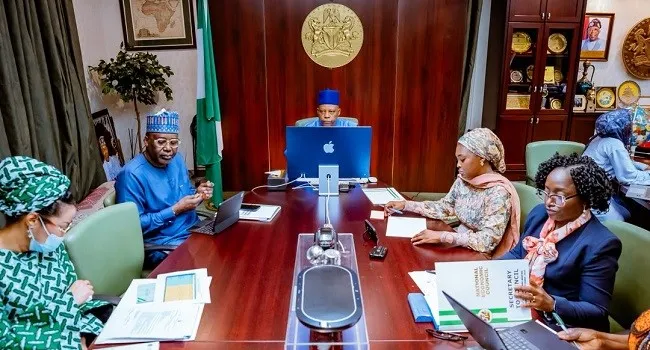
ABUJA, Nigeria — The National Economic Council (NEC) has endorsed a 90-day economic action plan aimed at reducing the cost of living, improving food affordability, attracting investment and accelerating projects expected to deliver tangible benefits to Nigerians.
The plan was presented by the Minister of Finance and Coordinating Minister of the Economy, Taiwo Oyedele, at the council’s 161st meeting held virtually on Thursday, October 22, 2026, under the chairmanship of Vice-President Kashim Shettima.
According to a statement issued by Stanley Nkwocha, Senior Special Assistant to the President on Media and Communications in the Office of the Vice-President, the initiative is designed to translate the Federal Government’s economic reforms into measurable improvements in the living conditions of households and businesses.
The 90-day action plan identifies five priority areas: food affordability, tax harmonisation, completion of high-impact projects, removal of investment bottlenecks and regulated household support.
The council’s endorsement comes amid persistent concerns over the high cost of essential commodities, transportation and other basic necessities, which continue to place pressure on household budgets across the country.
NEC Prioritises Affordable Transportation
As part of efforts to ease the financial burden on Nigerians, the council resolved to establish a joint financing framework between the Federal Government and state governments to accelerate the deployment of Compressed Natural Gas (CNG) and electric vehicles.
The decision followed a presentation on the National Affordable CNG Transit Programme by Ismaeel Ahmed, Chairman of the Presidential Initiative on Compressed Natural Gas and Electric Vehicles.
The council directed relevant authorities to engage transport unions and operators to ensure that savings generated through the use of alternative-energy vehicles are passed on to commuters through lower fares.
The initiative is intended to make public transportation more affordable and accessible, particularly for workers, traders, students and other Nigerians who depend on commercial transport for their daily activities.
However, the extent to which the programme will reduce transport costs will depend on its implementation, the availability of vehicles and whether operators translate lower operating expenses into reduced fares.
Government Moves to Strengthen Transparency
The council also approved the establishment of a national dashboard to monitor ongoing projects across the federation.
The proposed platform is expected to improve transparency, accountability and the tracking of public expenditure, with particular attention to the utilisation of funds saved from the removal of petrol subsidies.
The monitoring mechanism is intended to provide better oversight of government projects and improve public understanding of how available resources are being deployed.
Effective implementation could help identify delays, strengthen accountability and ensure that projects intended to benefit citizens receive appropriate attention.
FG Targets Further Economic Improvements
Presenting the economic outlook, Oyedele said the next phase of Nigeria’s economic reform programme would require coordinated action by federal and state governments to translate macroeconomic improvements into tangible benefits for households and businesses.
He identified reducing headline inflation and interest rates to single digits by 2027 as key policy objectives.
The minister also highlighted the importance of targeted interventions, improved fiscal coordination and the removal of barriers that discourage investment and economic activity.
Vice-President Shettima urged state governors and relevant government institutions to ensure that the objectives of President Bola Tinubu’s economic reforms translate into improved living conditions for Nigerians.
He emphasised the need for affordable transportation, improved healthcare, employment opportunities and greater financial security, stressing that economic progress should be assessed by its impact on citizens’ everyday lives.
Shettima also called for stronger cooperation between federal and state governments, noting that differences in their respective responsibilities should not obstruct the delivery of essential services.
Implementation Remains the Key Test
Although the National Economic Council’s endorsement represents a policy step towards addressing economic hardship, the practical impact of the 90-day plan will depend on the measures adopted by the relevant authorities.
The five priority areas outline the government’s intended direction, but Nigerians will be looking for concrete interventions capable of easing the cost of food, transportation and other essential expenses.
Clear implementation timelines, funding arrangements, measurable targets and transparent progress reports will be important in determining whether the initiative delivers meaningful relief within the proposed period.
The plan’s success will ultimately be judged by whether households experience a noticeable improvement in purchasing power, access to affordable services and general living conditions.
For millions of Nigerians facing economic pressures, the immediate expectation is that government policies will move beyond announcements and produce practical results in markets, on roads and in communities across the country.



0 Comments
No comments yet. Be the first to share your thoughts.
Leave a Comment